The NFP portion of my husband and my Pre-Cana retreat was a bit of a circus. It began with a couple explaining how they came by their six children- two failed attempts at NFP that led to two sets of twins, followed by two separate surprises when the couple assumed children were no longer a possibility. The second couple to mention NFP had eight children, all about two years apart. The day concluded with a very scattered nurse who promised that NFP would make our marriages borderline magical. Let’s just say that by the time she mentioned the fact that couples using NFP are less likely to divorce, one young man leaned over to his fiancé and whispered, “We can take our chances with divorce.” Obviously, no one was able to take the nurse seriously.
The leaders of our Pre-Cana retreat made a lot of promises during that weekend. They promised that we’d be happier because we used NFP, that we’d communicate more, that we’d be less likely to get divorced. They promised that it would be easy, that it wouldn’t require significantly less sex, that it would be nearly perfectly effective. NFP sounded like a dream come true, the recipe for a picture-perfect marriage. But my experience with NFP was nothing like they’d promised. I felt betrayed and completely disillusioned.
NFP means saying “no” several times a month, even when you really wanted to say “yes.” Oh, it’s your birthday, your anniversary? Well, unless you want to chance becoming pregnant this month, it’s a no-go for tonight. Practicing NFP can be challenging at times. It demands that we be virtuous, and sometimes virtue is just plain hard.
NFP only involves communication if you want it to. NFP talk can completely revolve around whether or not you can have sex at any given time, if you let it. I once saw a NFP speaker tell a classroom full of Pre-Cana participants that her husband wakes up every morning when she takes her temperature so that he can write it in the little notebook he keeps on his bedside table. I think she expected everyone to sigh because of the cuteness, but all I could think was, Why would you make your husband wake up when he doesn’t have to? But maybe he wants to do it. Maybe my husband just needs to grow in virtue, and I need to give him the opportunity to engage in a daily act of self-sacrificial love. But probably not.
You’re not less likely to get divorced because you practice NFP. That’s a correlation, not a causation. It’s not like NFP is some magical remedy for marital dissatisfaction. It’s more likely the case that the type of couple likely to use NFP (and stick with it) is also the type of couple that’s less likely to divorce. And that probably derives from the fact that many couples who don’t believe in using contraception also don’t believe in getting a divorce.
NFP is not easy. Yes, it requires virtue, but it also can require some trial and error. My husband and I tried a few forms of NFP before finding a method that worked for us. It’s wonderful that there are so many different types of NFP out there, but that also means it might take a while before you find the type that works best for you and your family.
NFP often does mean less sex, especially if you’re really adamant that you not become pregnant. Many of the cheaper forms of NFP require several days (around a week for many women) where abstinence will be required if you’re trying to prevent pregnancy. The window of possible fertility can be quite long depending on what form of NFP you choose, which might be tough for some couples to accept.
Some forms of NFP are very effective, and some methods are less so, but most of them need some room for user error. NFP relies on human virtue, and some of us struggle with chastity. NFP can only be really effective at preventing pregnancy if couples have the virtue necessary to say “no” when they need to. Many methods can also malfunction. Thermometers might break. Predictions of fertility might be off by a day or two. Most methods of NFP are very effective, but they have to be used correctly.
I think there’s a feeling among Pre-Cana coordinators that if we’re up front and honest about NFP, no one will give it a try. But if we’re not up front and honest, most couples won’t stick with it. They’ll feel disillusioned and betrayed like I did, and they might not have the moral conviction that my husband and I had to stick with it even when it is difficult. And I don’t think we give couples enough credit. They can handle the truth. And they can detect a lie. So don’t tell them NFP will always be easy. Tell them why it’s worth it even when it’s hard. Don’t tell them that it’ll improve communication. Tell them that communication and prayer are always necessary for a healthy marriage. Don’t tell them that NFP will be 99% effective. Tell them that it’s effective when it’s used correctly, but NFP will require virtue and chastity.
We need to be honest because we’re not doing couples any favors by sugar-coating the reality of NFP. If we want couples to stick with NFP, we need to give them a reason why it’s worth it. We can’t make false promises. We can’t romanticize what many couples find very difficult. We need to help couples see the beauty in God’s plan. We need to help them recognize the great good that is the gift of children. We have to change their hearts with the truth because we’re not going to change their minds with our sugar-coated lies.



 Two weeks ago, I had my six-week postpartum appointment, a visit that many Catholic couples dread. They often find themselves on the defensive as they try to explain why they don’t need to be sent home with a pack of condoms and a prescription for the pill. But when they try to explain that they plan to use Natural Family Planning (NFP) to prevent pregnancy, many doctors will try to convince them to consider other options. And the criticism often extends beyond our doctors. Couples who choose to use NFP are often criticized by friends and family as well, people whose opinions matter to them. In my experience, a lot of the arguments against the use of NFP revolve around three myths, each of which emerges from a misconception regarding the nature of NFP. Some of these myths do have some truth to them, but it’s important that we sort out what is fact and what is fiction before we make any judgments on the value of Natural Family Planning.
 So yes, the rhythm method is not overly scientific. And the science that it is based on is inherently faulty. A family planning method that simply takes the length of your cycle, splits it in half, and tells you not to have sex at the halfway point is not highly scientific. But NFP is not the rhythm method.
 Myth 2: Natural Family Planning is unreliable.
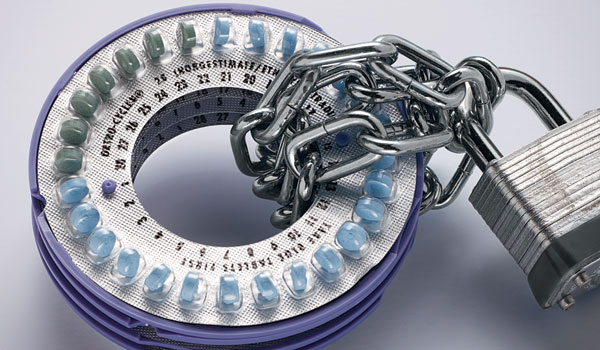 But it is. It is not the method that is unreliable in the above scenario. It is the user. But an unreliable person is just as likely to forget or choose not to use a condom, or to forget to take the pill a few times. Women who use NFP responsibly are much less likely to get pregnant. In fact, many methods of NFP are 96-99% effective if user correctly. That’s the same rate as the pill, and even better than a condom. If we believe that women can be responsible enough to take the pill every day or that men are responsible enough to use a condom every time, we should be able to say the same about the woman using NFP. If she can remember to pop the pill, she is equally capable of remembering to chart her fertility. And like most parts of our daily routine, if you get into the habit of charting regularly, it will become second-nature. Ultimately, many methods of NFP are very reliable, and I think we need to put more faith in our own sense of responsibility- which brings me to the third myth.
 Though most people are more than happy to argue about how unscientific and unreliable NFP are, there is another argument that they often refuse to voice but assume to be true: NFP is unreasonable because it’s ridiculous to assume that people can say ‘no’ to sex when they are fertile. While we might fight to control our bodies, apparently there is no need or reason to control our sexual drive. Apparently, when it comes to sex, we’re animals. We can’t resist the urge. We can’t abstain for even a few days of the month. There is apparently no need for the virtue of chastity in this world. No need for self-control when it comes to one’s sexuality. Most people assume that NFP won’t work because men and women are apparently incapable of saying ‘no’ to sex at any time.
 Love in the Little Things