
My husband and I share the duties of a stay-at-home parent. We both work- Andrew part-time, and myself full-time, but we take turns caring for John while the other is working. I even work twelve-hour days in my office twice … Continue reading
My husband and I share the duties of a stay-at-home parent. We both work- Andrew part-time, and myself full-time, but we take turns caring for John while the other is working. I even work twelve-hour days in my office twice … Continue reading

For those who have been readers for a few years, you know that I spent time discerning the religious life before I married my husband. For those who have not been reading as long, here’s the short of it: after … Continue reading

Natural family planning. It’s a topic that I’ve written on several times before- most notably here and here. I have attempted to disprove several common myths surrounding NFP in an attempt to defend it against those who would have you … Continue reading

Last Sunday was my first Mother’s Day, and I must admit that it was a bit of a learning experience. In the weeks leading up to the holiday, I was repeatedly asked if I had any requests for a Mother’s … Continue reading
 Two weeks ago, I had my six-week postpartum appointment, a visit that many Catholic couples dread. They often find themselves on the defensive as they try to explain why they don’t need to be sent home with a pack of condoms and a prescription for the pill. But when they try to explain that they plan to use Natural Family Planning (NFP) to prevent pregnancy, many doctors will try to convince them to consider other options. And the criticism often extends beyond our doctors. Couples who choose to use NFP are often criticized by friends and family as well, people whose opinions matter to them. In my experience, a lot of the arguments against the use of NFP revolve around three myths, each of which emerges from a misconception regarding the nature of NFP. Some of these myths do have some truth to them, but it’s important that we sort out what is fact and what is fiction before we make any judgments on the value of Natural Family Planning.
Myth 1: Natural Family Planning is unscientific.
There’s a common misconception that NFP is the same thing as the rhythm method, an outdated mode of preventing pregnancy that was erroneously based on the falsity that all women have a 28-day cycle and/or that ovulation takes place halfway through a woman’s cycle (I’ve heard it explained both ways). Both of these assumptions are wrong. Most women do not have a 28-day cycle. In fact, most women who are considered normal don’t have a 28-day cycle. Theirs might be 24 days or 32 days, but just those few days of discrepancy would be enough to make the rhythm method useless. Even if your cycle is only off by a few days, unless you choose to leave a huge margin of error, there’s a chance you’re going to wind up with an unplanned pregnancy. Similarly, if a woman’s cycle is shorter or longer than the typical 28 days, then ovulation will not take place at the halfway point, but a few days before or a few days after.
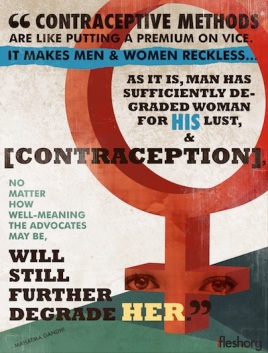 So yes, the rhythm method is not overly scientific. And the science that it is based on is inherently faulty. A family planning method that simply takes the length of your cycle, splits it in half, and tells you not to have sex at the halfway point is not highly scientific. But NFP is not the rhythm method.
In fact, there is not just one form of NFP. There are actually quite a few, and many of them are based on sound science. As a DRE who does Pre-Cana, trust me, no one in the Catholic Church takes the rhythm method very seriously.
Other forms of NFP are much more scientific. Many methods take into consideration women’s hormone levels and the resulting physiological changes that go along with changes in those levels. Creighton model relies on changes in women’s cervical fluid. Sympto-thermal also considers the change in women’s basal body temperature at ovulation. Ovacue uses the electrolytes in a woman’s saliva to chart her fertility. Each method is different, but they’re all based on sound science.
There might have been a time in history when the rhythm method was considered revolutionary and ahead of its time. It applied mathematics to the woman’s cycle and was based on what was then considered sound scientific observations. The rhythm method seemed incredibly logical, and it wasn’t until the discovery of one incredibly important fact- that ovulation is not always the halfway point of a women’s cycle- that the entire method fell apart. Its science was finally debunked. It was not the first or last time that a theory that seemed like “sound science” became highly unscientific. The fields of science and medicine can both attest to that fact- advances in science depend on it. Today’s methods of Natural Family Planning are undeniably more scientific than the rhythm method. I would even argue that the science that supports modern methods of NFP are also more scientific than most forms of contraception used today. There’s nothing scientific about a condom or an IUD. They’re just pieces of plastic that act as semen-blockers. And as for the pill, considering all the negative side effects (discussed here), I would feel much more comfortable trusting the science of NFP rather than the science behind the pill. At least I can understand how NFP works with my body.
 Myth 2: Natural Family Planning is unreliable.
This myth is occasionally tied up with the first myth. If NFP is considered synonymous with the rhythm method, it will inevitably be considered unreliable- because the science is faulty. Consequently, the second myth can be debunked in the same manner as the first. The rhythm method is NFP insofar as it is natural and a method of family planning, albeit a poor one. And for a small percent of women, it actually does work- not because the method is reliable, but because some women’s cycles are that reliable. But as I said earlier, most, if not all, women using NFP to monitor their fertility are not using the rhythm method.
Some people who object to NFP know enough about it to know that there are multiple methods, and they also object to the reliability of the other forms. How reliable can a method be that relies so heavily on human observations? How can we trust a method of preventing pregnancy that is so open to human error? If you forget to make an observation, you might get pregnant. If you get negligent with your charting, you might get pregnant. If you get complacent with your observations and start making assumptions based on the past, you might get pregnant. If you decide to have sex when you know you’re fertile, you might get pregnant. If you make one mistake, you might get pregnant. Does that sound like a reliable form of birth control?
 But it is. It is not the method that is unreliable in the above scenario. It is the user. But an unreliable person is just as likely to forget or choose not to use a condom, or to forget to take the pill a few times. Women who use NFP responsibly are much less likely to get pregnant. In fact, many methods of NFP are 96-99% effective if user correctly. That’s the same rate as the pill, and even better than a condom. If we believe that women can be responsible enough to take the pill every day or that men are responsible enough to use a condom every time, we should be able to say the same about the woman using NFP. If she can remember to pop the pill, she is equally capable of remembering to chart her fertility. And like most parts of our daily routine, if you get into the habit of charting regularly, it will become second-nature. Ultimately, many methods of NFP are very reliable, and I think we need to put more faith in our own sense of responsibility- which brings me to the third myth.
Myth 3: Natural Family Planning is unrealistic.
This is the myth that most people do not want to discuss, but is always taken for granted as being true. It draws from our own human weakness, something that many people want to simultaneously affirm and deny. We are told that we should be in control of our bodies, that no one should ever tell us how our bodies are to be used. It’s the basis of the whole female reproductive rights movement- women deserve to have control over their bodies. And yet, at the same time, we tell women that they cannot control their bodies- or at least their sexual drive.
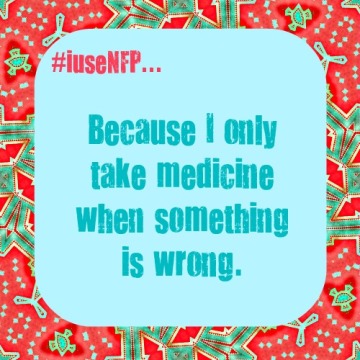 Though most people are more than happy to argue about how unscientific and unreliable NFP are, there is another argument that they often refuse to voice but assume to be true: NFP is unreasonable because it’s ridiculous to assume that people can say ‘no’ to sex when they are fertile. While we might fight to control our bodies, apparently there is no need or reason to control our sexual drive. Apparently, when it comes to sex, we’re animals. We can’t resist the urge. We can’t abstain for even a few days of the month. There is apparently no need for the virtue of chastity in this world. No need for self-control when it comes to one’s sexuality. Most people assume that NFP won’t work because men and women are apparently incapable of saying ‘no’ to sex at any time.
Just as the second myth assumes that we can’t be responsible, the third one assumes that we can’t be chaste. Some opponents of NFP assert that it’s just not possible to remain abstinent during fertile times, that a method of family planning that depends on our ability to resist our urge to have sex is doomed to fail. Considering the fact that there are plenty of couples out there using NFP successfully, it would appear that the assumption that we can’t say ‘no’ is false.
But there are some people who would not go so far. Sure, it might be possible that people can and do say ‘no,’ but should they have to?
And I think that argument gets to the crux of the matter. NFP is hard. It requires that we find other ways to express our love for one another at certain times of the month. There are plenty of people out there who won’t give NFP a chance simply because they don’t want to have to say ‘no’ when they want to say ‘yes.’ But I would argue that a relationship will be healthier if both spouses can say ‘no’ from time to time. Because they’re saying ‘no’ to one thing, they are saying ‘yes’ to so much more. They are saying ‘yes’ to multiple date nights as couples find different ways to show their love. They are saying ‘yes’ to a method of preventing pregnancy that respects the man and woman’s bodies, their relationship, and the conjugal act itself. They are saying ‘yes’ to God and His plans for their lives. And those ‘yes’s’ mean so much more than that single ‘no.’

A few months back, I wrote a blog post regarding some of the lesser-known perks of being pregnant. I spent time reflecting on some of the attitude changes that accompanied pregnancy, particularly concerning my body and my relationship with food. … Continue reading

John, as I’m writing this, I’m 40 weeks pregnant with you, and I know that there’s a good chance that your dad and I will be meeting you soon. In all likelihood, before my next post goes live on Monday, … Continue reading

I’ve heard many stories and read many blog posts explaining how having children changes the relationship between a husband and wife. Many of these men and women reference the effects of late-night feedings, date nights when there’s no longer the … Continue reading
 Week 39. John Whitmore could realistically arrive any day now. Or it could be another three weeks before we meet him. As his due date creeps closer and closer, my husband and I know that it’s only a matter of time- but at this point, only John knows how much time. Every morning I wake up and wonder, “Is today going to be the day?” Every day that I drive into work, I have to ask myself, “Will I go into labor while I’m sitting in my office?” Every time I begin to teach a class, I find myself worrying that my water will break in front of a bunch of eighth grade students. But so far, every night I fall asleep knowing that we’ve made it through another day without incident. Every night I give thanks that I am one day closer to the beginning of my days of working from home.
Last Sunday I taught my last Confirmation class. This past Tuesday I held my last Youth Night. Sunday was my last CCD class. Tomorrow will be my last service activity at the parish. Andrew has accompanied me to most of these events, but there has still been a degree of uncertainty. We don’t know when JT will decide to make his first appearance in this world. We don’t know when labor will begin, or how quickly it will progress. We do know that it’s a 45 minute drive from our apartment to the hospital, and from both of our jobs to our apartment. Forty-five minutes can be a very long time, especially when you’re in labor.
Every day, we pray that JT will wait until his due date to make his first appearance in this world. We pray that everything will go smoothly, that we will arrive at the hospital safely and in a timely manner, that JT will be born healthy. We can hope, but we obviously can’t be sure. JT will work on his own schedule. Ultimately, he’ll arrive exactly when he wants to, and no amount of stress and worry will change that. And I think this is just our first lesson in being parents. In the weeks following JT’s birth, Andrew and I will have the difficult task of establishing some sort of “schedule” to fulfill his needs. We will need to learn how often he will nurse, how often he will nap, how long his naps will last, and how often we’ll need to change his diapers. We’ll have to figure out the best times for sleep, showers, exercise, work, and shopping trips. After my maternity leave ends, I’ll have to figure out how to balance being a mother and being a DRE and Youth Minister. I will need to figure out how to fit work between nursing sessions, playtime, and naps. And I’ll need to figure out how to do all of this on less than my usual 8.5 hours of sleep.

Before I got married, the only person that I needed to consider was myself. I ate when I wanted to eat, slept when I wanted to sleep, exercised when I wanted to exercise, and showered when I wanted to shower. The only part of my life that was pre-determined were my hours in the classroom or at work. When I wasn’t in school or at work, my time was my own. I did with it what I wanted to do. I didn’t have to worry about satisfying the needs of anyone else. It sounds selfish, but this is simply the life of a single woman. Of course I thought about the feelings of my friends and family, but their needs rarely prevented me from eating, sleeping, and exercising whenever I wanted. Life was about fulfilling my needs.
After I got married, the amount of people that I needed to consider when I made decisions doubled. Now it wasn’t just me. It was Andrew and me. I couldn’t just heat up soup for dinner anymore; I actually needed to cook, to make sure that Andrew and I were both eating a balanced diet of grains, meat, veggies, and fruit. Andrew and I needed to work out a shower schedule when we both had places to go at the same time. Sometimes, I needed to postpone my workout to run an errand for Andrew, or I needed to stay at home for a day because Andrew needed to borrow my car when his had a flat tire. I had to make sacrifices for him, to rearrange my schedule to fit our needs, but he also was more than willing to make all sorts of sacrifices for me as well.
 Even after we found out that we had become parents, our lives didn’t change much. We knew that we were now a family of three, but for the most part, it still felt like just Andrew and me. Yes, my unborn child had needs, but they were mostly met by meeting my own. I needed to eat well, but I was already in the habit of eating healthily. I needed to exercise, but I was already walking daily. I needed to get rest, but I was already used to getting a full 8.5 hours of sleep a night. Though I know that I have already had to make sacrifices for my son, they never really felt like sacrifices. Yes, I gained weight, but I was eating well, exercising, and I even had the opportunity to buy lots of new clothing. Yes, it was more difficult to walk up and down stairs because of the added pressure on my already asthma-laden lungs, but this just gave me an excuse to rest periodically through the day. Andrew began doing our laundry (the laundry room was four floors down from our apartment) without a fuss. When my morning sickness prevented me from cooking and/or washing the dishes, Andrew readily began cooking and washing the dishes himself. Over the past eight and a half months of marriage, we have both learned how to make sacrifices for each other. We have also settled into a very efficient routine, meeting our own needs and making sure that each other’s needs are satisfied as well.
Both of our lives changed when we got married. In a few weeks (or days), our lives will change again. We will have another set of needs to consider, and this time, we will be the only ones who can make sure his needs are met. JT will not be able to take care of his own needs. He will not be able to feed himself, change his own diaper, or give himself a bath. He won’t be able to put himself down for a nap or dress himself. He won’t even be able to lift up his own head at first. He will be completely dependent on us, his parents, to make sure that he gets all the care and love that he needs. He will need us to put our own needs aside on a daily basis to guarantee that his needs are met. He will need us to make sacrifices, to abandon our own routines from time to time. Our lives are going to change a lot, but Andrew and I are okay with that. We love our son already, though we have not yet laid eyes on him even, and we would do anything for him.
Mary Help of Christians, pray for us!

Our first Christmas together as husband and wife is already over. It seemed to pass in the blink of an eye, and now we’re already more than halfway through the Christmas season. I’m currently sitting in my mother-in-law’s living room, … Continue reading
 Love in the Little Things